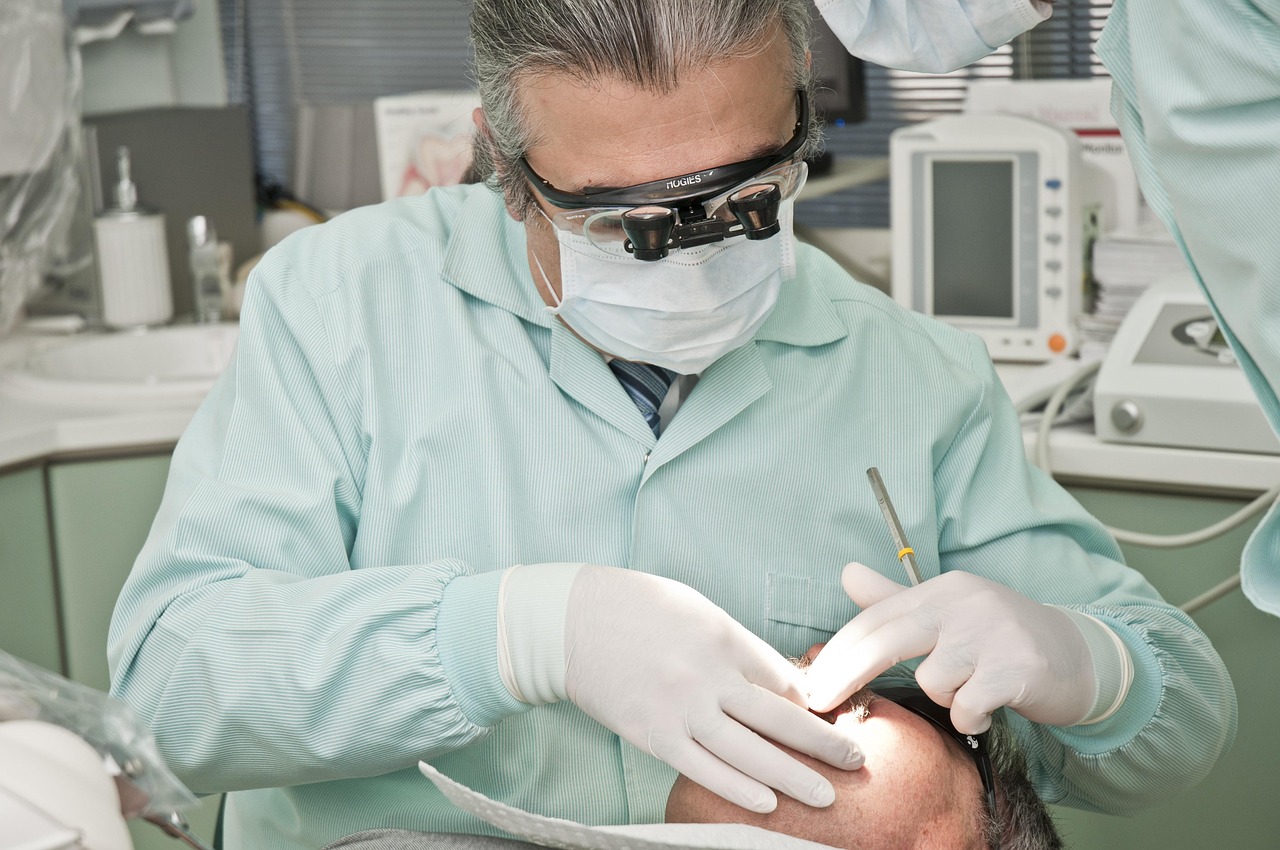

The idea of undergoing dental treatment abroad appeals to many French people for various reasons. The question of reimbursement for such treatment by the French health insurance system therefore arises quite legitimately. The Primary Health Insurance Fund (CPAM) can indeed cover part of these expenses.
However, the process is governed by strict rules that vary depending on the destination and the nature of the medical procedures. A precise understanding of the procedure is essential to avoid unpleasant financial surprises.
General conditions for reimbursement of dental care abroad
Reimbursement of your dental care abroad by the health insurance system is not automatic. It depends on the eligibility of the treatment under the French medical fee schedule and compliance with a specific administrative procedure. To be eligible, the dental treatment received must appear on the list of procedures reimbursed by Social Security in France.
Scaling, treatment of a cavity, or a simple extraction are therefore common procedures that are generally covered. Conversely, purely aesthetic procedures that are not recognized as medically necessary will not be reimbursed. Verifying this eligibility before departure is a key step. The second condition concerns the administrative framework.
Health insurance requires the submission of a complete file that includes the practitioner’s detailed invoice, a treatment report, and possibly X-rays. The submission of these supporting documents to your CPAM determines whether your reimbursement request for dental care abroad will be processed.
You have a limitation period of 2 years after the date of treatment to submit your reimbursement request to your affiliated CPAM. Also pay attention to the distinction between a stay abroad and residence in another country. For people who live permanently outside France, the rules of the French health insurance system may no longer apply.
The crucial distinction between the EU/EEA and the rest of the world
The reimbursement procedure for dental care abroad differs depending on whether you are in the European Economic Area (EEA) or in a non-EU country. In the European Union, the EEA, Switzerland, or the United Kingdom, the principle of free movement of services applies.
Your dental care abroad in these areas is then treated, for reimbursement purposes, as if it had been carried out in France. You therefore benefit from the same reimbursement rates, calculated on the basis of the French fee schedule, without the need for prior authorization for routine care. This administrative facilitation is an important right for French residents.
For dental care abroad outside this area, the process is more complex. Prior authorization from your Primary Health Insurance Fund is almost systematically required before your departure.
This request must be medically justified and may require several weeks of processing. The absence of authorization seriously compromises, or even cancels, any possibility of subsequent reimbursement by health insurance, except in duly justified cases of extreme emergency.
The specific framework within the European Area
Dental care carried out abroad in an EU/EEA country or in Switzerland follows a unified legal and administrative framework.
The basis for calculating reimbursements for dental care abroad
Reimbursement for dental care carried out in the area is based on the French statutory tariffs in force. If you pay €200 for a procedure whose reimbursement base in France is €80, Health Insurance will calculate its reimbursement on this €80 basis. The difference remains at your expense or that of your supplementary insurance.
This rule highlights the importance of requesting a detailed estimate from the foreign practitioner before the procedure. Comparing it with French tariffs then helps you use simulators or contact your supplementary insurer to anticipate your actual out-of-pocket expenses.
The role and limits of the European Health Insurance Card (EHIC)
The EHIC is exclusively intended for unplanned and medically necessary care that occurs during a temporary stay (holidays, studies, business travel). It facilitates coverage according to the tariffs and rules of the host country. However, for planned dental care (the type that motivates your trip, such as implants or crowns), the EHIC does not apply.
In this context, you must pay the full cost upfront on site. Upon your return to France, you will need to send your CPAM the S3125 form together with the original paid invoices and proof of payment. This is how you can obtain reimbursement according to French tariffs.
The administrative procedure for submitting a reimbursement request
Requesting reimbursement for dental care abroad requires particular administrative rigor. Missing documents or procedural errors may delay or even lead to the rejection of your file by Health Insurance.
The composition of the file to be submitted
Your reimbursement file for dental care abroad must include several supporting documents. The original paid invoice from the practitioner, made out in your name, is essential. It must detail each procedure performed, including the teeth concerned, the dates, and the amount paid.
A clinical report explaining the medical necessity of the treatment is also strongly recommended, as well as dental X-rays before and after the procedure. Always keep a copy of all original documents you send. If the documents are in a foreign language (outside the EU/EEA), a translation may be required by your CPAM.
Submission methods and processing times
The reimbursement request must be submitted exclusively by postal mail to your affiliated Primary Health Insurance Fund (CPAM). The mailing must include the paper treatment form and all original supporting documents. Online submission via your Ameli account is not suitable for this type of request.
Also note that the processing time by Health Insurance for this type of file is variable. It may take several weeks, or even several months. It is therefore advisable to send your request as soon as possible after your return.
The specific case of major and costly dental care
The French Health Insurance system reimburses certain major dental procedures, but only on the basis of its very restrictive fee schedule. For example, a crown on a vital tooth is reimbursed at a certain percentage based on a very specific tariff. However, certain materials or techniques may not be covered.
As for dental implants, Health Insurance never reimburses the implantation procedure itself. Only the crown placed on the implant may be covered.
For these costly treatments, obtaining a very detailed estimate before departure is imperative. Submitting the estimate is necessary for your supplementary insurer, but the CPAM will not give prior approval for reimbursement based on an estimate.
The importance of supplementary health insurance
Reimbursement by health insurance for dental care abroad covers only part of the costs, calculated on the basis of French statutory tariffs. The involvement of your supplementary insurer is therefore crucial to reducing your out-of-pocket expenses.
Checking contractual guarantees
Before undertaking dental care abroad, reviewing your supplementary health insurance contract is essential. Some insurers impose specific annual reimbursement caps for dental care. Others require a prior coverage request for procedures outside the fee schedule or performed outside France.
Lack of awareness of these clauses may lead to a refusal of supplementary coverage. This is why you should contact your advisor and submit the estimate for the planned treatment. A written response confirming the exact amount covered provides valuable financial security before your departure.
How the health insurance and supplementary insurance tandem works
Final reimbursement for dental care abroad generally takes place in two stages. First, Health Insurance processes your file and pays its share. It then issues a reimbursement statement.
This statement, together with the original paid invoice, must be sent to your supplementary insurer, which calculates its own reimbursement according to your contract. For care abroad, automatic electronic transmission is not always activated, so manual submission is often required.
Appeal options in the event of refusal of reimbursement
If your health insurance fund refuses to reimburse your dental care abroad, several appeal options are available. You have 2 months from notification of the refusal to request a review of your file by registered letter with acknowledgment of receipt.
If this fails, you may refer the matter to the amicable appeals committee of your CPAM. As a last resort, legal action before the social security court is possible.
The assistance of a specialized lawyer is recommended for complex cases involving significant amounts. Keeping all correspondence with the health insurance fund is essential, and close attention must be paid to limitation periods.