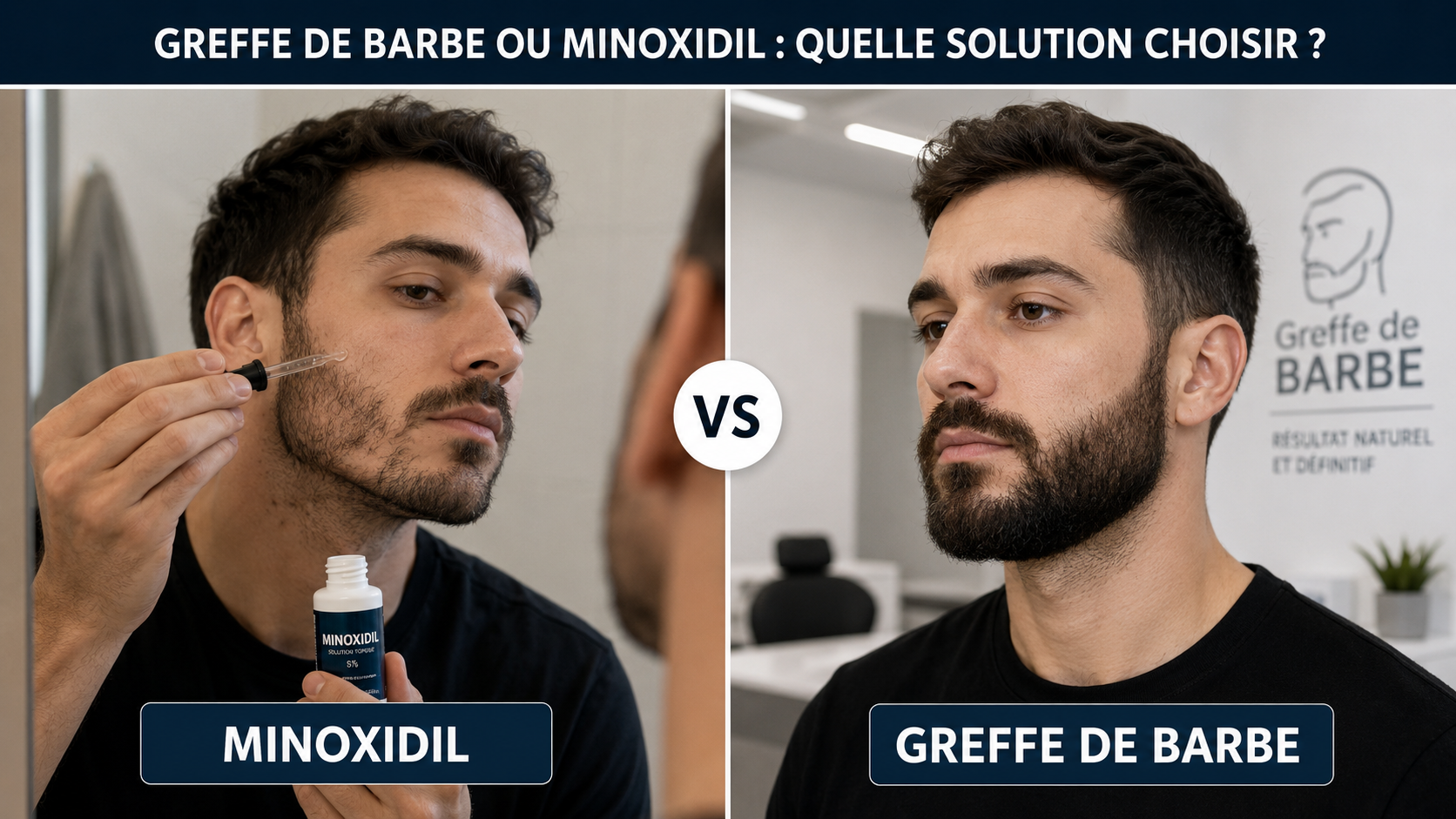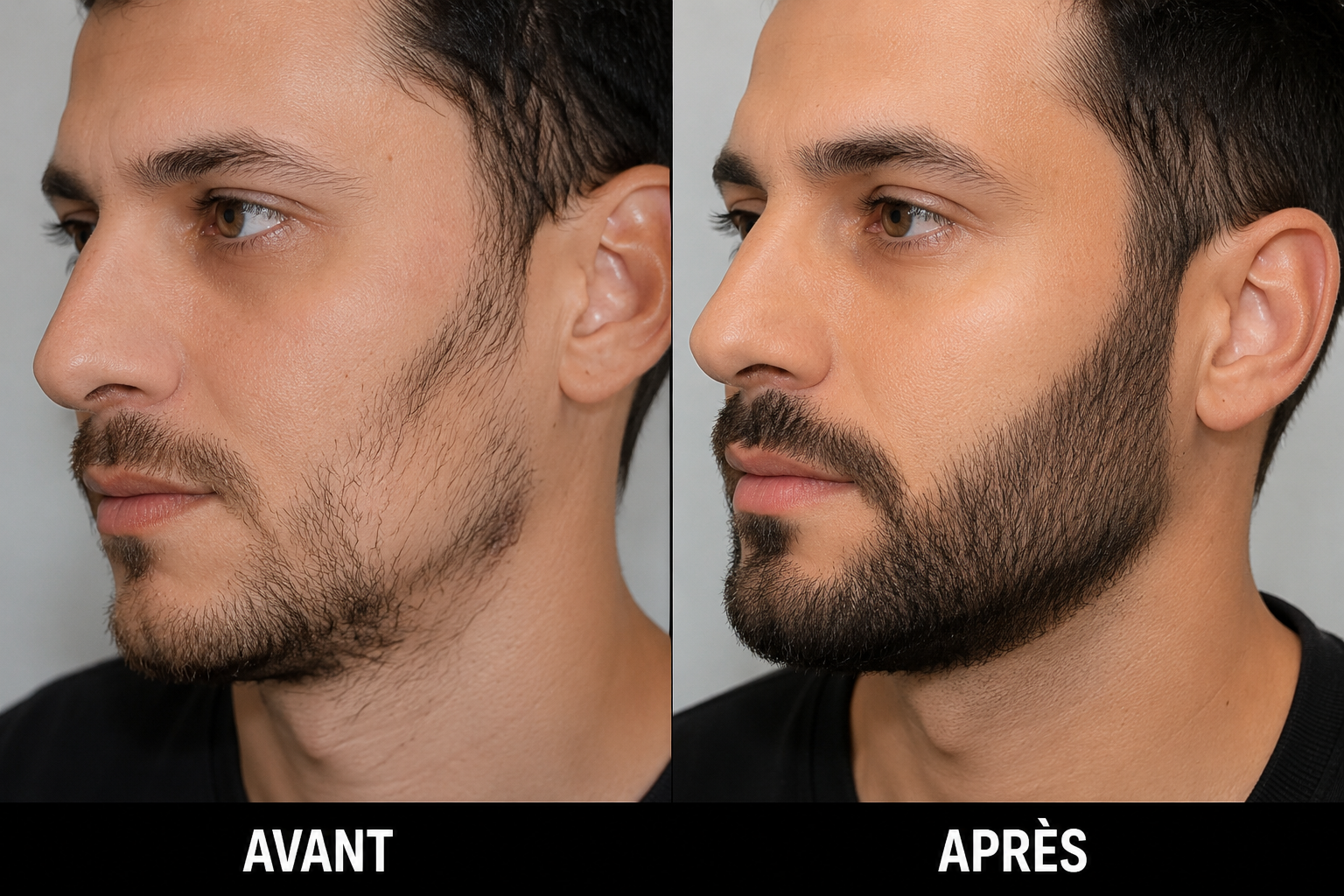

Before and after photos of a beard transplant are often the first thing people look at before considering the procedure. They make it easier to visualize the possible transformation: a denser beard, a more defined line, filled-in gaps, or a more balanced mustache. However, not all before and after photos have the same value. To properly assess the result of a beard transplant, you should not only look at whether the beard appears fuller. You also need to observe the density, the direction of hair growth, the symmetry, the beard line, the donor area, the lighting, the time elapsed after the procedure, and above all, the natural appearance of the final result.
Why Before and After Photos Matter Before a Beard Transplant
Beard transplant before and after photos give patients a first impression of a clinic’s or practitioner’s expertise. They show the ability to correct a patchy beard, increase cheek density, fill in hairless areas, or redefine a mustache. For many patients, these images are reassuring because they show real results achieved on other men.
However, it is important to remain cautious. A beautiful photo does not automatically guarantee a good result. A successful beard transplant must look natural, suit the face, and remain stable over time. That is why several elements should be analyzed before making a decision. A photo taken from a flattering angle, under soft lighting, or with a longer beard can create the impression of more density than there really is. On the other hand, a good result may look less spectacular if the beard is short or if the lighting is very strong.
The First Thing to Look At: Beard Density
Beard density is usually the first thing people notice in a before and after photo. Before the procedure, some patients have gaps on the cheeks, an uneven beard, a thin mustache, or little to no facial hair in certain areas. After the transplant, the goal is to create enough density to achieve a more even and harmonious beard.
However, the goal should not always be maximum density. A beard that is too dense compared with the patient’s natural facial features may look artificial. A good result respects the patient’s natural hair growth, face shape, and overall beard style. A natural beard transplant should make it look as though the hairs have always been there. When density is well distributed, the transplanted areas blend naturally with the existing beard.
| Element to Observe | Good Sign | Warning Sign |
|---|---|---|
| Beard density | Even and balanced beard | Too dense or irregular |
| Beard line | Natural design adapted to the face | Too straight or artificial |
| Hair direction | Hairs follow the natural angle | Hairs grow in inconsistent directions |
| Symmetry | Balanced appearance on both sides | Visible difference between cheeks |
| Overall appearance | Subtle and natural result | “Drawn-on beard” effect |
The Beard Line: A Key Detail
The beard line plays a major role in the final result. A line that is too low, too high, too straight, or too geometric can immediately make the beard look artificial. In before and after photos, it is important to check whether the line follows the natural structure of the face. A good implantation should respect the natural contours of the beard without creating an overly sharp border.
The cheek line should remain soft and progressive. A natural beard is not always perfectly straight. Slight controlled irregularities can actually make the result more realistic. The specialist must therefore avoid creating a beard that looks too rigid or overly designed. A successful beard implantation is based on the right balance between density, shape, and naturalness.
Hair Direction: A Sign of Real Precision
One of the most important criteria in a FUE beard transplant is the direction of the implanted hairs. Facial hair does not grow in the same direction everywhere. On the cheeks, it may point downward or slightly backward. On the chin, it often grows more vertically. Around the mustache, the hairs follow a very specific direction above the upper lip.
In a before and after photo, you should therefore check whether the implanted hairs follow the natural direction of beard growth. If the hairs grow in a disorganized way or at an angle that is too straight, the result may look artificial, even if the density is good. A natural beard transplant requires precise implantation, graft by graft, to respect the correct exit angle of each hair.
Facial Symmetry After a Beard Transplant
Symmetry is another important element to observe. A well-designed beard should balance the face. Both cheeks should look consistent, the mustache should blend with the rest of the beard, and the chin should maintain a harmonious shape. In before and after photos, it is useful to look at the face from the front, but also from the side.
A slight difference between both sides of the face is completely normal because no face is perfectly symmetrical. However, a very visible difference may indicate a lack of precision in the design or implantation. A good clinic takes the time to analyze the patient’s facial structure before defining the beard shape.
The Time Between the Procedure and the After Photo
One detail that is often overlooked is when the “after” photo was taken. The final result of a beard transplant is not visible immediately. After the procedure, the transplanted hairs may fall out within a few weeks. This is a normal phase. Regrowth then begins gradually, usually from the third or fourth month.
The final result is often visible between 10 and 12 months. Some areas may continue to improve up to 15 months depending on the patient. This means you should be cautious with photos shown too early. A photo taken at 2 months does not show the final result. A photo taken at 12 months is much more representative.
| Time After Transplant | Typical Evolution | What It Means |
|---|---|---|
| 1 to 2 weeks | Scabs, redness, visible hairs | Not the final result |
| 2 to 8 weeks | Temporary shedding of transplanted hairs | Normal stage of the process |
| 3 to 4 months | Gradual regrowth begins | Result still incomplete |
| 6 months | Density becomes more visible | Clear improvement, but not final |
| 10 to 12 months | Mature result | Best time to assess the outcome |
| 12 to 15 months | Final density refinement | Stabilized result |
Pay Attention to Beard Length in Photos
Beard length can strongly influence the impression of density. A longer beard often looks thicker than a short beard. In some before and after photos, the patient has very short stubble before the procedure and a longer beard after it. This can make the transplant appear denser than it actually is.
To compare properly, the photos should ideally show a similar beard length. This makes it easier to evaluate the true density of the grafts and the quality of the implantation. A reliable before and after photo should present the result under comparable conditions.
Lighting and Photo Angle Can Change Perception
Lighting plays an important role in how results appear. Soft light can hide sparse areas, while strong light can reveal gaps in the beard. Similarly, a three-quarter angle can make a beard look denser than a front or side view.
You should therefore check whether the before and after photos were taken under similar conditions: same distance, same lighting, same angle, same facial expression, and similar beard length. These are important criteria for honestly judging the result of a beard transplant before and after. A serious clinic usually presents clear, realistic, and unretouched photos.
The Quality of the Donor Area
The donor area is usually located at the back of the scalp. This is where the follicles are extracted before being implanted into the beard. In before and after photos, people often focus only on the face, but it is also important to make sure the donor area has been respected.
Poor extraction can leave visible marks, reduced density, or an irregular appearance at the back of the head. With the FUE method, follicles are extracted one by one, which helps limit visible scarring. However, the quality of the technique remains essential. A good transplant should improve the beard without damaging the donor area.
Natural Appearance: The Most Important Criterion
The main criterion of a successful beard transplant is naturalness. A dense but artificial-looking beard is not a good result. The goal is to create facial hair that blends perfectly with the face. The patient should not look as though he has had a procedure. The hairs should blend with the existing beard, respect natural angles, and create a progressive density.
A good result does not look like a transplant. It looks like a well-shaped, balanced beard that suits the patient’s personality. This is why the practitioner’s experience is so important. A beard transplant requires precise aesthetic judgment because it directly affects the face.
Beard Transplant in Turkey: Why Compare Before and After Results?
A beard transplant in Turkey attracts many international patients, especially in Istanbul. Turkish clinics are known for their experience in hair transplant, beard transplant, and mustache transplant procedures. Prices are often more accessible than in Western Europe, and many clinics offer packages including the procedure, hotel, transfers, and follow-up care.
However, not all clinics offer the same level of quality. That is why beard transplant before and after photos in Turkey are especially important to analyze. They help assess the implantation style, the quality of the beard lines, the density achieved, and the natural appearance of the result. It is better to choose a clinic that can show several real cases with different patient profiles: patchy beard, gaps in the beard, thin mustache, scar camouflage, or lack of beard growth on the cheeks.
What to Ask Before Choosing a Clinic
Before undergoing a beard transplant, it is recommended to ask several questions. How many grafts will be needed? Which technique will be used? Will the result be adapted to the shape of the face? How long does post-operative follow-up last? Are the before and after photos real patients from the clinic? How long after the procedure were the after photos taken?
These questions help avoid disappointment. A serious clinic should clearly explain the possibilities, but also the limits of the procedure. It should not promise unrealistic density or immediate results. A FUE beard transplant requires time, precision, and proper healing.
Mistakes to Avoid When Looking at Before and After Photos
The first mistake is focusing only on density. A very dense beard is not always a sign of a good result. You also need to look at hair direction, beard line, harmony with the face, and overall implantation quality.
The second mistake is comparing your case to another patient’s without considering the starting point. A man who already has a partial beard will not get the same result as a patient with almost no facial hair. Donor area quality, age, skin type, and natural hair growth all strongly influence the final result.
The third mistake is believing that the result is visible immediately. A beard transplant before and after should be evaluated over the long term, ideally after 10 to 12 months.
How to Recognize a Failed Beard Transplant
A failed beard transplant can be recognized by several signs. The beard line may be too straight, too low, or poorly adapted to the face. The hairs may grow in the wrong direction, creating a messy effect. Density may be uneven, with some areas overloaded and others too sparse. The result may also lack naturalness, especially if the grafts were implanted at an angle that is too vertical.
In some cases, the donor area may also have been overharvested. This is why it is important not to choose a clinic based only on price. A beard transplant is an aesthetic procedure that remains visible every day. The choice of practitioner should therefore be based on experience, transparency, and the quality of results.
Beard Transplant Before and After: What a Good Result Should Show
A good result should show a more even beard, balanced density, and a line adapted to the face. Sparse areas should be filled without excess. The mustache, chin, and cheeks should form a coherent whole. The hairs should follow a natural direction, and the skin should not show persistent irritation.
The transformation can be impressive, but it must remain believable. The best beard transplant before and after result is one that shows visible improvement without looking artificial. A successful beard should enhance facial features, not make them look overly harsh.
FAQ – Beard Transplant Before and After
When can you see the real result of a beard transplant?
The real result of a beard transplant usually appears between 10 and 12 months after the procedure. Early regrowth may be visible from 3 or 4 months, but density continues to improve gradually.
Do transplanted beard hairs fall out after the procedure?
Yes, transplanted hairs often fall out a few weeks after the transplant. This is a normal stage called temporary shedding. The follicles remain implanted under the skin and later produce new hairs.
How can you tell if a before and after photo is reliable?
A reliable photo should be taken with the same angle, lighting, distance, and similar beard length. It should also mention how long after the procedure the after photo was taken, ideally 10 to 12 months.
Can a beard transplant look natural?
Yes, a natural beard transplant is possible when the hairs are implanted in the correct direction, with suitable density and a harmonious beard line.
Why is hair direction so important?
Hair direction determines how natural the result looks. If the hairs are implanted too straight or in the wrong direction, the beard may appear artificial.
How many grafts are needed for a beard transplant?
The number of grafts depends on the area to be treated. A small correction may require a few hundred grafts, while a full beard may require several thousand grafts.
Is a beard transplant in Turkey a good option?
Turkey is a recognized destination for beard transplant thanks to the experience of many clinics and often more accessible prices. However, it is essential to choose a serious clinic and carefully review its before and after results.
Can a failed beard transplant be corrected?
In some cases, correction is possible. It may involve adding density, redesigning certain areas, or improving the overall harmony of the beard. A personalized evaluation is necessary.
Can a transplanted beard be shaved?
Yes, once healing is complete and regrowth is established, a transplanted beard can be shaved, trimmed, and maintained like a natural beard.
What is the main criterion of a good before and after result?
The main criterion is naturalness. A good beard transplant before and after should show visible improvement without an artificial effect or an overly drawn beard line.